

America now daily
  • Home
  • Business
    BusinessShow More
    From Founding Fathers to Modern Entrepreneurs: Timeless Lessons for American Business

    The principles that guided the Founding Fathers of the United States remain…

    5 Min Read
    Clean Energy and Low Taxes Drive South American Nation to Lead in Electric Cars Per Capita

    The combination of clean energy and low taxes has turned a small…

    6 Min Read
    Strategic Stockpiles and the Global Minerals Power Shift

    The global competition for critical resources has entered a new phase as…

    4 Min Read
    Carnival boosts the creative economy and drives corporate strategies across the country

    Carnival boosts the creative economy and drives corporate strategies across the country…

    4 Min Read
    U.S. Economic Resilience Amid Growing Geopolitical Uncertainty

    U.S. economic resilience amid growing geopolitical uncertainty has become a defining narrative…

    4 Min Read
  • Technology
    TechnologyShow More
    Bank of America Expands Tech Deal-Making Power by Recruiting Top Bankers

    Bank of America’s recent move to hire four senior technology bankers highlights…

    5 Min Read
    U.S. Stock Markets Close Higher Driven by AMD and the Technology Sector

    U.S. stock markets closed higher, largely driven by the strong performance of…

    6 Min Read
    Between fields, power, and algorithms: a global landscape in transformation

    The debate around advanced technology and political influence has taken on new…

    5 Min Read
    Industrial strategy reshapes the direction of automotive electrification in Brazil

    Industrial strategy reshapes the direction of automotive electrification in Brazil at a…

    4 Min Read
    How AI Is Helping Companies Adopt a Four-Day Workweek

    Artificial intelligence is increasingly reshaping how companies organize work, and one of…

    4 Min Read
  • News
    NewsShow More
    Alexandre Costa Pedrosa
    Alexandre Costa Pedrosa analyzes content marketing for healthcare professionals: How to stand out?

    The digital landscape has transformed the relationship between doctors and patients, making…

    5 Min Read
    Tiago Schietti
    Professional Ethics in the Funeral Sector, with Tiago Schietti

    Professional ethics in the funeral sector is one of the pillars that…

    5 Min Read
    The Myth of the American Dream and Its Impact on Contemporary Society

    The concept of the American Dream has long been presented as the…

    5 Min Read
    Risk management in sensitive operations requires technique and anticipation to ensure institutional security. Ernesto Kenji Igarashi emphasizes structured responsibility in critical scenarios.
    Risk Management in Sensitive Operations: Technique, Anticipation, and Responsibility in Institutional Security

    Ernesto Kenji Igarashi, a specialist in institutional security and protection of authorities,…

    5 Min Read
    Digital Ethics becomes essential as automated decisions reshape business and society. Andre de Barros Faria emphasizes the need for governance and transparency in AI systems.
    Digital Ethics: The Challenges of Automated Decisions in the Age of Artificial Intelligence

    As highlighted by the CEO of Vert Analytics and technology specialist, Andre…

    5 Min Read
  • About Us
Reading: Global Economic Stability Gains Breathing Room as US and China Delay Tariff Hike
Share
America now dailyAmerica now daily
Font ResizerAa
  • Technology
Search
  • Home
  • Business
  • Technology
  • News
Follow US

Home » Global Economic Stability Gains Breathing Room as US and China Delay Tariff Hike

Business

Global Economic Stability Gains Breathing Room as US and China Delay Tariff Hike

Diego Velázquez
Diego Velázquez
August 12, 2025
Share
SHARE

In a significant development for global markets, the United States and China have agreed to extend their current trade pause for another three months. This decision comes at a critical moment, as both nations were just hours away from implementing steep tariff increases that could have escalated tensions and disrupted international commerce. By taking this step, the two largest economies in the world have given themselves more time to negotiate solutions on long-standing trade disputes, ranging from market access issues to concerns over technology transfers and national security.

The agreement ensures that current tariffs will remain unchanged during this period, with the United States maintaining its import tax levels and China holding its own duties steady. While this may not immediately resolve the underlying disputes, it prevents a sudden shock to global supply chains. Businesses around the world, especially those involved in manufacturing, agriculture, and technology, have been closely monitoring these talks, aware that any change in tariff policy could directly affect pricing, production timelines, and market competitiveness.

Both governments have emphasized the need for continued dialogue, recognizing that mutual economic interdependence is too significant to ignore. Negotiations are expected to address structural trade imbalances, intellectual property protections, and access to critical resources such as rare earth elements. These discussions will also cover emerging industries, where cooperation and competition often blur the lines, making the stakes even higher. The decision to extend talks demonstrates a willingness to find common ground, even in the face of domestic political pressures on both sides.

The pause in escalation is likely to calm investor nerves, at least temporarily. Financial markets tend to react sharply to uncertainty, and the risk of a renewed trade war has been weighing heavily on global economic forecasts. Analysts point out that while this extension offers relief, it also prolongs uncertainty for companies that rely on predictable trade conditions to plan investments and supply chain operations. The challenge now lies in translating this diplomatic reprieve into concrete, mutually beneficial agreements that can be sustained over the long term.

Industries most affected by tariffs, such as technology and agriculture, are expected to play a key role in shaping the next phase of discussions. American farmers, who have faced declining exports to China in recent years, are particularly hopeful for improved market access. Similarly, Chinese manufacturers in sectors like electronics and consumer goods are eager to secure stable terms that will allow them to continue exporting to the US without fear of sudden cost increases. These industries have a vested interest in seeing the negotiations succeed, as their profitability and growth depend on smooth trade relations.

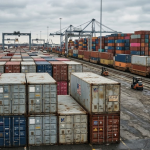
The extension also has implications for global supply chains beyond just the two nations involved. Many countries are indirectly affected by the flow of goods between the US and China, especially those that supply raw materials or intermediate products. Any progress made in resolving trade disputes will likely have a ripple effect, improving stability in international shipping, reducing volatility in commodity prices, and fostering a more predictable environment for multinational corporations.

Despite the cautious optimism, challenges remain. Deep-rooted disagreements over industrial policy, foreign investment rules, and strategic technology sectors will not be resolved overnight. Both sides face domestic constituencies that demand strong action to protect national interests, making compromise politically sensitive. Observers warn that the three-month extension should not be mistaken for a permanent solution but rather as a window of opportunity that requires focused, results-oriented negotiations.

Ultimately, the decision to delay tariff increases represents a strategic choice by both nations to prioritize dialogue over confrontation. While the outcome of these talks is far from guaranteed, the move sends a message to global markets that cooperation, even amid rivalry, is possible. The coming months will be crucial in determining whether this truce evolves into a lasting agreement or merely postpones another round of economic conflict. For now, the world watches closely, hopeful that diplomacy can prevail where confrontation has failed.

Author: Eura Tymal

Share This Article
Email Copy Link Print
Previous Article California Ranch Retreats: A Refined Escape into Wild Elegance
Next Article Navigating Economic Calm as the Two Giants Hit Pause
Alexandre Costa Pedrosa
Alexandre Costa Pedrosa analyzes content marketing for healthcare professionals: How to stand out?
News
From Founding Fathers to Modern Entrepreneurs: Timeless Lessons for American Business
Business
Bank of America Expands Tech Deal-Making Power by Recruiting Top Bankers
Technology
Tiago Schietti
Professional Ethics in the Funeral Sector, with Tiago Schietti
News

You Might Also Like

Business

Global Trade Shifts Drive New Economic Balances

As the global trade landscape evolves rapidly, it becomes clear that global trade shifts drive new economic balances, shaping the…

5 Min Read
Business

Understanding the Realities of US Immigration and Visas — Between Myths and Feasible Paths

Many people dream of living in the United States legally, seeking opportunities for work, education, or a fresh start, but…

4 Min Read
Business

Impact of the Trump and Republican Party Tax Bill on Medicare and the U.S. Economy

The Trump and Republican Party tax bill has sparked intense debates in Washington due to its potential impact on important…

4 Min Read
Business

Carnival boosts the creative economy and drives corporate strategies across the country

Carnival boosts the creative economy and drives corporate strategies across the country as it establishes itself as one of the…

4 Min Read
America now daily

Experience news with a fresh perspective. AmericanowDaily delivers compelling stories that matter, told with passion and accuracy. Join the conversation today.

Search for Commercial Alternatives: How Trump’s Taxes Are Driving Opportunities for Mercosur
February 14, 2025
Global Economic Stability Gains Breathing Room as US and China Delay Tariff Hike
August 12, 2025
Antônio Fernando Ribeiro Pereira
The Role of the Leader as a Cultural Architect: Shaping Values Beyond Internal Policies
May 20, 2025

AmericanowDaily – [email protected]

Follow US
Welcome Back!

Sign in to your account

Username or Email Address
Password

Lost your password?