

America now daily
  • Home
  • Business
    BusinessShow More
    Trump’s Tariff Offensive Reaches 60 Countries — And American Businesses Are Now Caught in the Middle

    New forced labor duties of up to 12.5% hit major trading partners,…

    7 Min Read
    The AI Productivity Paradox: Why Businesses Are Rushing to Adopt AI but Still Struggling to See Results

    Companies are investing heavily in artificial intelligence, yet many are discovering that…

    7 Min Read
    Leadership Change in Tyrone Area School District Business Administration and Its Impact on Local Education Management

    The departure of the business administrator from the Tyrone Area School District…

    6 Min Read
    The ChatGPT Revolution in Business: How Artificial Intelligence Is Reshaping Corporate America

    Artificial intelligence is rapidly changing the way companies operate in the United…

    6 Min Read
    Indigenous Crafts and Creative Business: how Native-led showcases strengthen culture and economy

    Indigenous crafts and the growing presence of Native-led businesses are gaining increasing…

    5 Min Read
  • Technology
    TechnologyShow More
    The AI Race Is No Longer Just About Models — It’s About Who Controls the Infrastructure

    From chip acquisitions to sovereign AI programs, the U.S. tech sector is…

    8 Min Read
    How AI Assistants Are Becoming the New Operating System for Everyday Life and Work

    From Siri’s transformation to AI-powered search and digital agents, a new generation…

    7 Min Read
    Huawei Chip Manufacturing Technology and the Strategy to Bypass Global Semiconductor Restrictions

    The discussion around Huawei chip manufacturing technology has returned to the center…

    6 Min Read
    Autonomous Tractors Are Reshaping the Sugar Industry and Accelerating the Future of Agriculture

    The rapid expansion of autonomous tractors in the United States sugar industry…

    6 Min Read
    Digital Sovereignty in Europe: Why the Continent Is Reducing Dependence on U.S. Software and Investing in Sovereign Technology

    Europe’s push for digital sovereignty is reshaping how governments and businesses approach…

    5 Min Read
  • News
    NewsShow More
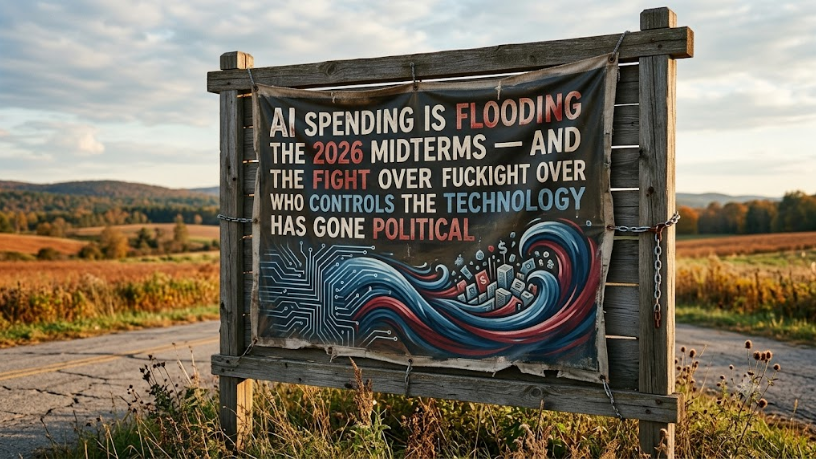
    AI Spending Is Flooding the 2026 Midterms — And the Fight Over Who Controls the Technology Has Gone Political

    Tens of millions of dollars are pouring into congressional races over artificial…

    6 Min Read
    Marcello José Abbud
    Healthcare Waste Requires Special Management to Protect People and the Environment

    O debate em torno da saúde pública e da segurança ambiental inclui…

    6 Min Read
    Gustavo Khattar de Godoy
    Evidence-Based Medicine: Learn How Safer Decisions Are Made

    According to Gustavo Khattar de Godoy, a physician specialized in radiology and…

    6 Min Read
    Luciano Colicchio Fernandes
    What Practices Adopted by Generative AI Leaders Can Be Replicated by Other Organizations?

    Entrepreneur Luciano Colicchio Fernandes points out that generative artificial intelligence has evolved…

    5 Min Read
    Márcio Alaor de Araújo
    Understand with Márcio Alaor de Araújo whether your company is growing by merit or by inertia

    Organizational growth is often seen as a clear sign of success. Revenue…

    4 Min Read
  • About Us
Reading: AI Spending Is Flooding the 2026 Midterms — And the Fight Over Who Controls the Technology Has Gone Political
Share
America now dailyAmerica now daily
Font ResizerAa
  • Technology
Search
  • Home
  • Business
  • Technology
  • News
Follow US

Home » AI Spending Is Flooding the 2026 Midterms — And the Fight Over Who Controls the Technology Has Gone Political

News

AI Spending Is Flooding the 2026 Midterms — And the Fight Over Who Controls the Technology Has Gone Political

Diego Velázquez
Diego Velázquez
June 26, 2026
Share
SHARE

Tens of millions of dollars are pouring into congressional races over artificial intelligence, turning data centers and chip policy into mainstream campaign issues.

Contents
How AI Became a Campaign Issue in 2026The Stakes in the November Elections

There is a moment in every major technological shift when the technology stops being a business story and becomes a political one. For artificial intelligence in the United States, that moment arrived in the summer of 2026. What began as a policy debate among tech executives, academics, and regulators has now spilled into congressional primaries, ballot initiatives, and multimillion-dollar advertising campaigns targeting voters who may never have heard of a GPU or a large language model. The midterm elections are seven months away, and AI has become one of their defining fault lines.

Support and opposition to artificial intelligence is drawing tens of millions of dollars of spending during the 2026 midterm election cycle, with the heated rhetoric in races across the country reflecting the AI industry’s political fault lines and competing visions of what the future should look like. The spending is coming from multiple directions: technology companies eager to shape regulation before it constrains them, labor advocates warning about job displacement, and a growing coalition of voters in states where data center construction has become a local flashpoint. NPR

How AI Became a Campaign Issue in 2026

The path from abstract technology concern to tangible political mobilization ran through several concrete flashpoints. In Utah, demonstrators gathered at the State Capitol in May 2026 to oppose the construction of a data center, a protest that has become part of a broader national conversation about the infrastructure costs of the AI boom. At the same time, Senator Bernie Sanders unveiled a bill to create an AI sovereign wealth fund, a proposal designed to capture a share of the economic gains from AI for public benefit — a direct response to concerns that the technology’s rewards are flowing primarily to a small number of corporations and investors. The HillThe Hill

On the other end of the spectrum, regulators approved a plan for quick AI data center grid connections, a decision that reflects the administration’s pro-growth posture but that has drawn criticism from utilities and environmental groups worried about the energy demands of hyperscale computing. These are not abstract regulatory disputes. They translate directly into electricity bills, land use decisions, and local employment patterns that affect voters in congressional districts far from Silicon Valley. The Hill

The political geography of AI anxiety also intersects with the tariff debate. Trump’s ongoing trade war has created uncertainty for semiconductor manufacturers and cloud computing providers who depend on global supply chains, giving Democrats an opening to argue that the administration’s trade policy is undermining the very industrial base it claims to be building. That argument has traction in manufacturing states where voters have direct experience with supply chain disruption.

The Stakes in the November Elections

The midterm elections of 2026 arrive at an unusually consequential moment for AI governance. The Senate has been making progress on a large housing bill bouncing between chambers, but the legislative agenda over the summer is expected to be dominated by debates over AI regulation, tariff policy, and the budget — all of which intersect with how the federal government will ultimately manage the AI transition. GovTrack

Congress has so far produced no comprehensive AI legislation. The absence of a federal framework has left a patchwork of state-level rules, executive orders, and agency guidance to fill the void, creating legal uncertainty for companies and citizens alike. Whoever controls Congress after November will determine whether that vacuum gets filled with light-touch industry-friendly rules, stronger consumer and labor protections, or some negotiated compromise between the two.

A “people-powered” super PAC has launched specifically to counter AI industry spending in the midterms, a sign that civil society is organizing in response to what many see as an outsized corporate influence on AI policy. The combination of well-funded industry lobbying and emerging grassroots opposition creates the conditions for AI to become one of the most contested policy areas in the fall campaign. NPR

Meanwhile, the international dimension of the issue is not lost on voters or candidates. The U.S.-China AI competition, the tariff disputes affecting semiconductor supply chains, and the growing global fragmentation of AI governance are all issues with direct domestic consequences — in wages, in national security, and in the basic question of who gets to participate in the economy that AI is building.

The 2026 midterms will not resolve the AI question. But they will set the terms for the next round of negotiation between government, industry, and the public about how the technology gets developed, deployed, and governed. That negotiation is now fully underway, and the outcome is genuinely uncertain.

Sources:

  • NPR Politics — https://www.npr.org/sections/politics/
  • The Hill — https://thehill.com/
  • The Washington Post Politics — https://www.washingtonpost.com/politics/
  • GovTrack — https://www.govtrack.us/

Autor: Diego Rodríguez Velázquez

Share This Article
Email Copy Link Print
Previous Article Trump’s Tariff Offensive Reaches 60 Countries — And American Businesses Are Now Caught in the Middle
Next Article The AI Race Is No Longer Just About Models — It’s About Who Controls the Infrastructure
The AI Race Is No Longer Just About Models — It’s About Who Controls the Infrastructure
Technology
Trump’s Tariff Offensive Reaches 60 Countries — And American Businesses Are Now Caught in the Middle
Business
Marcello José Abbud
Healthcare Waste Requires Special Management to Protect People and the Environment
News
Gustavo Khattar de Godoy
Evidence-Based Medicine: Learn How Safer Decisions Are Made
News

You Might Also Like

Ernesto Kenji Igarashi
News

The training that prepares operators to act even under extreme adrenaline, with Ernesto Kenji Igarashi

As highlighted by Ernesto Kenji Igarashi, creator of the Weapons and Shooting Group of the Federal Police Superintendence in São…

6 Min Read
Christian Zini Amorim clarifies the concept of living inheritance and its benefits.
News

Living Inheritance: What It Is and Why More Lawyers Are Recommending It

Living inheritance planning has gained prominence among lawyers specializing in Family and Succession Law. According to Dr. Christian Zini Amorim,…

4 Min Read
Carlos Eduardo Rosalba Padilha highlights the role of governance and risk management in protecting companies.
News

Governance and Risk Management: Shielding Against the Unexpected

According to specialist Carlos Eduardo Rosalba Padilha, governance and risk management have become central elements for business sustainability and growth…

4 Min Read
News

Pause on Federal Grants: The Impact of the White House Decision

The recent decision by the White House to pause the release of federal grants has had a major impact on…

5 Min Read
America now daily

Experience news with a fresh perspective. AmericanowDaily delivers compelling stories that matter, told with passion and accuracy. Join the conversation today.

EBS – Empresa Brasileira de Saneamento
Environmental Education: See How Collective Awareness Can Strengthen Sustainability
May 25, 2026
Digital Sovereignty in Europe: Why the Continent Is Reducing Dependence on U.S. Software and Investing in Sovereign Technology
April 27, 2026
FotoModel makes it possible to create Flash Collections with professional photos in record time.
Flash Collections? Get Professional Photos in Record Time
September 10, 2025

AmericanowDaily – [email protected]

Follow US
Welcome Back!

Sign in to your account

Username or Email Address
Password

Lost your password?