
Indigenous crafts and the growing presence of Native-led businesses are gaining increasing relevance in an economic landscape that values cultural identity, sustainability, and authenticity. This article examines how initiatives that showcase Indigenous artists and entrepreneurs contribute to the preservation of traditions, the expansion of markets, and the strengthening of economic autonomy within these communities, while also reflecting on the cultural impact of this movement on contemporary consumption.
The appreciation of Indigenous crafts is no longer only an aesthetic or cultural matter; it has become a strategic element within the creative economy. In different regions, business showcases and events have brought together Indigenous artists, artisans, and small entrepreneurs, creating an environment where tradition and innovation coexist in a complementary way. This dynamic reveals an important shift in how the market perceives cultural products, which are no longer seen merely as consumer goods but as living expressions of identity and history.
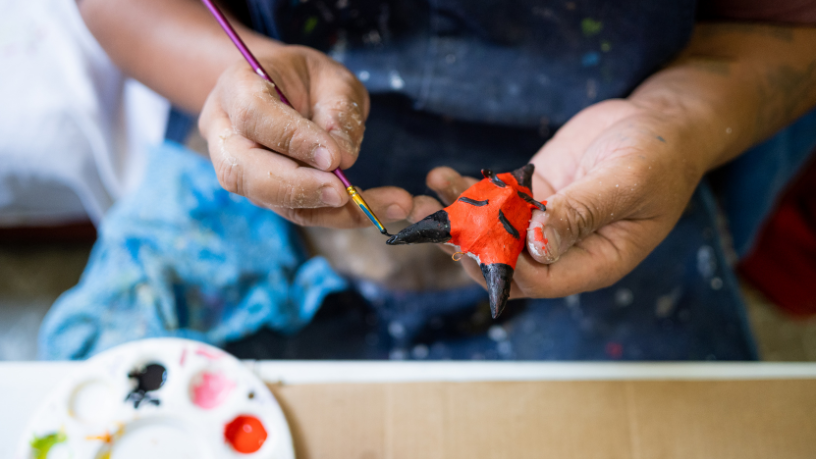
These initiatives play a decisive role in increasing visibility for communities that have historically faced barriers to accessing broader markets. By exhibiting handcrafted pieces, clothing, jewelry, and objects produced using ancestral techniques, these entrepreneurs are not only selling products but also sharing narratives that carry collective memory, spirituality, and a deep connection to land and territory. This symbolic dimension adds value to their work and strengthens the recognition of Indigenous crafts as living cultural heritage.
At the same time, the presence of Indigenous artists in business spaces creates concrete opportunities for income generation and financial autonomy. The direct or facilitated commercialization of their work allows greater control over pricing, distribution, and brand positioning. This helps reduce reliance on intermediaries and increases participation in the production chain, which is essential for long-term economic sustainability.
Another relevant aspect is how consumers have responded to these initiatives. There is a growing interest in authentic, handmade products with meaningful stories behind their creation. In this context, Indigenous crafts stand out not only for their visual appeal but also for the cultural depth they carry. This trend reflects a broader shift in consumer behavior, where people increasingly seek purpose and meaning in their purchasing decisions.
The curation of these business events plays a central role in this process. When Indigenous artists and artisans are brought together in well-structured environments, a bridge is created between tradition and the contemporary market. This mediation is important because it allows the public to better understand the context behind the pieces while ensuring that creators have appropriate space to present their work without cultural distortion or oversimplification.
From an economic perspective, the expansion of these showcases strengthens what is known as the Indigenous creative economy, a sector that grows based on cultural identity and sustainable innovation. Instead of relying solely on traditional production chains, many of these entrepreneurs now operate independently, using digital platforms, in-person fairs, and institutional partnerships. This expansion increases product reach and reinforces Indigenous presence in previously inaccessible markets.
It is also important to consider the educational impact of these initiatives. By directly engaging with Indigenous crafts, the public gains a deeper understanding of the diversity of Indigenous peoples and their contributions to contemporary culture. This helps challenge stereotypes and promotes a broader, more respectful perspective on these communities, strengthening intercultural dialogue.
In terms of social development, valuing these businesses contributes to strengthening collective self-esteem and preserving traditional knowledge. Each piece produced carries techniques passed down through generations, and its circulation in new markets ensures that this knowledge remains alive. This process is not only economic but also symbolic and educational.
The growth of Indigenous business showcases demonstrates that there is a consistent path between cultural preservation and economic innovation. When these two elements come together, opportunities emerge that benefit both creators and society as a whole. In this context, Indigenous crafts become more than products; they represent a bridge between past, present, and future, connecting stories, territories, and new forms of conscious consumption.