
The growing visibility of cultural events organized by immigrant communities in the United States reflects a broader movement centered on identity, belonging, and social connection. The recent Niki Sideris Walk in New York became more than a symbolic gathering for the Greek American community. It highlighted the importance of preserving heritage, strengthening intergenerational ties, and promoting unity in one of the most multicultural cities in the world. This article explores the cultural significance of the event, the evolving role of diaspora communities in modern society, and why initiatives like this continue to gain relevance in an increasingly globalized world.
Large metropolitan centers such as New York have long served as cultural crossroads where immigrant traditions coexist with modern urban life. Within this environment, ethnic communities constantly face the challenge of maintaining their cultural identity while adapting to new social realities. Events connected to heritage, language, religion, and collective memory play a crucial role in preserving these connections across generations.
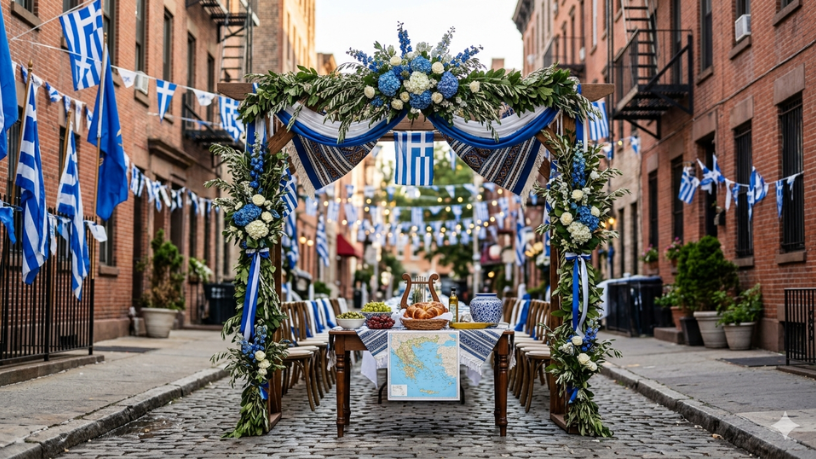
The Niki Sideris Walk represents this dynamic in a particularly meaningful way. Community gatherings centered on shared identity often function as both celebration and affirmation. They remind younger generations of their historical roots while creating opportunities for older generations to transmit traditions, values, and stories that might otherwise gradually disappear over time.
For many Greek Americans, cultural identity extends far beyond ancestry alone. It includes family traditions, religious customs, language preservation, food culture, and strong community relationships. Public events that bring these elements together help transform cultural memory into an active social experience rather than a distant historical reference.
Modern immigrant communities face a unique paradox. On one hand, globalization and digital communication make it easier than ever to maintain connections with ancestral homelands. On the other hand, rapid assimilation and changing lifestyles can weaken traditional cultural bonds, especially among younger generations born outside their family’s country of origin. This creates a growing need for public initiatives capable of reinforcing collective identity in accessible and contemporary ways.
The Greek American community in New York remains one of the most historically influential ethnic groups in the city. Generations of immigrants contributed to local business development, education, arts, politics, and neighborhood life. Over time, however, many cultural traditions risk becoming diluted within the fast pace of urban multiculturalism. Community driven events therefore serve as important instruments of continuity.
The emotional value of these gatherings should not be underestimated. In many cases, they create spaces where individuals feel represented, understood, and socially connected. This is particularly important in modern urban environments where isolation and fragmentation have become increasingly common social challenges. Cultural events strengthen not only heritage preservation but also mental and emotional belonging.
Another important aspect involves visibility. Public cultural events help minority communities maintain presence within broader society while encouraging intercultural understanding. In multicultural cities, diversity becomes stronger when communities actively share their traditions instead of quietly assimilating into anonymity. Visibility contributes to social recognition and reinforces the idea that cultural diversity remains one of the defining strengths of American society.
The growing popularity of heritage centered events also reflects changing attitudes toward cultural identity among younger generations. Many young Americans with immigrant backgrounds are showing renewed interest in ancestry, language learning, traditional celebrations, and family history. This movement represents a shift away from older assimilation models that often encouraged communities to minimize ethnic distinctions in order to integrate more quickly into mainstream society.
Social media has amplified this phenomenon considerably. Cultural events that once reached only local audiences now gain national and even international visibility through digital platforms. This exposure helps communities strengthen networks, attract younger participants, and preserve traditions using modern communication tools. In many ways, technology has become an unexpected ally in cultural preservation.
At the same time, these events carry broader symbolic importance during periods of social and political polarization. Community centered initiatives often promote values such as solidarity, inclusion, shared identity, and civic participation. They demonstrate how cultural heritage can unite people rather than divide them, especially when diversity is treated as a social asset instead of a source of separation.
The success and visibility of the Niki Sideris Walk also highlight how cultural traditions continue adapting to modern realities without losing their essence. Traditions survive not because they remain frozen in the past, but because communities find new ways to keep them meaningful in contemporary society. Public engagement, intergenerational participation, and community pride all contribute to this process of cultural renewal.
As immigrant communities continue shaping the social fabric of major global cities, cultural preservation will likely become even more important in the years ahead. Events like the Niki Sideris Walk reveal that identity remains deeply connected to collective memory, shared experiences, and human connection.
The Greek American community’s continued investment in cultural visibility demonstrates that heritage is not simply about remembering the past. It is also about creating a stronger sense of belonging for future generations living within increasingly diverse and interconnected societies.
Autor: Diego Velázquez