
New forced labor duties of up to 12.5% hit major trading partners, reshaping costs and supply chains for U.S. companies at home and abroad.
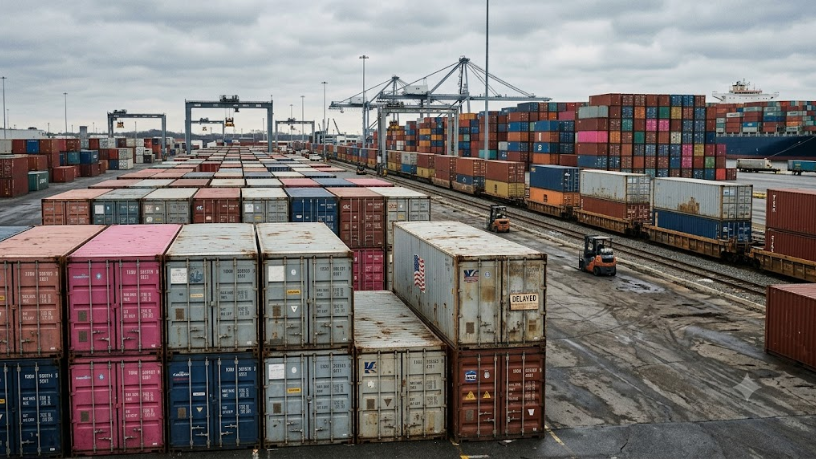
The word “tariff” became almost unavoidable in American business circles throughout 2025. In 2026, it has become something closer to a crisis management challenge. The Trump administration’s latest trade move, announced by the Office of the U.S. Trade Representative in early June, proposes additional duties of up to 12.5% on imports from 60 economies — including China, the European Union, and Japan — on the grounds that those countries have failed to enforce bans on goods produced with forced labor. For American businesses that rely on global supply chains, the question is no longer whether these tariffs will affect their operations, but how much.
The USTR has proposed a 10% duty rate for economies that have adopted a full or partial prohibition on forced labor trade, and 12.5% for all others. While the rates may seem modest compared to earlier rounds of Section 232 and IEEPA tariffs, their breadth is what sets this action apart. Public comments are due by July 6, with hearings scheduled for July 7, leaving businesses a narrow window to push back or adjust their procurement strategies. CNBC
What Exactly Is Being Targeted, and Why Now
The legal instrument behind this latest move is Section 301 of the Trade Act of 1974, a statute that allows the U.S. government to respond to foreign trade practices it deems “unreasonable or discriminatory.” The USTR’s determination found that all 60 investigated countries have failed to impose or effectively enforce a prohibition on forced labor-related imports, creating what it called an “unlevel playing field” for American workers. The framing is strategic: by centering the argument on labor rights rather than purely economic protectionism, the administration attempts to build broader political and public support. CNBC
The timing matters too. The U.S. Supreme Court ruled 6-3 on February 20, 2026, that IEEPA does not authorize tariffs, leaving the administration to pursue other legal routes to impose new duties. With its primary tool struck down by the courts, the White House has leaned harder on Section 301 and Section 232 authorities, which have proven more legally durable. The new forced labor tariffs follow a Section 301 investigation that was already targeting 16 major trading partners over overcapacity in strategic manufacturing sectors. Tax Foundation
For companies in sectors like electronics, apparel, machinery, and automotive components, this creates a layered exposure problem. The proposed new tariffs add additional cost and complexity to an already complicated import environment. Parties purchasing significant amounts of imported products should examine existing contracts to determine their direct and indirect financial obligations related to the payment of import tariffs. Fredrikson & Byron
How the Tariff Landscape Has Changed Since 2025
Understanding the current moment requires looking at the trajectory. As of April 2026, the effective tariff rate stood at 7.0 percent, the lowest level since March 2025, following the Supreme Court’s February declaration that the IEEPA tariffs were unconstitutional. That decline gave some importers temporary relief — and even spurred a tariff refund process, with U.S. Customs and Border Protection reporting $85 billion in potential and certified refund applications as of late May, with $21 billion already paid out. But any sense of stabilization appears short-lived. Penn Wharton Budget ModelJ.P. Morgan
On June 10, President Trump said he was “not looking to renew” the U.S.-Mexico-Canada Agreement, claiming that the United States does not “need” either country as a trading partner. That statement rattled industries from plastics and agriculture to automotive manufacturing that depend heavily on integrated North American supply chains. USMCA renegotiations were set to begin the following week in Washington, though the president’s remarks cast doubt on the prospects of a smooth outcome. Passle
Meanwhile, the administration announced historic trade deals following Trump’s state visit to China in May 2026, along with earlier reciprocal trade agreements with the UK, Indonesia, Bangladesh, and Taiwan. The contradiction between aggressive unilateral tariff actions and bilateral deal-making reflects the administration’s broader negotiating posture: pressure first, then structure agreements on its own terms. United States Trade Representative
What Businesses Should Watch Before July
For American companies with exposure to international supply chains, the next few weeks are unusually consequential. A Section 301 investigation initiated by the USTR in October 2025 to evaluate whether foreign government policies are contributing to structural excess manufacturing capacity may lead to additional Section 301 tariffs, import restrictions, or other trade remedies in late 2026. That investigation covers electronics, semiconductors, EV components, batteries, machinery, and metals — essentially every major growth sector in the American economy. Trade Compliance Resource Hub
The tariff picture is also complicated by what remains exempt. The Trump administration has signaled that tariffs on pharmaceuticals could potentially rise toward 200% by mid- to late-2026. If that materializes, healthcare supply chains will face a disruption of an entirely different scale. J.P. Morgan
Businesses that waited to act may now be running out of time. The proposed July 7 hearings represent the last formal public forum before the USTR finalizes its decision on the 60-country forced labor duties. Companies importing goods from affected markets should consult trade counsel, document their supply chain compliance, and model out the financial impact of both the 10% and 12.5% scenarios. The tariff environment of mid-2026 is not temporary noise. It is a structural reset of American trade policy — and the businesses that treat it as such will be best positioned to survive it.
Sources:
- CNBC — https://www.cnbc.com/2026/06/03/us-tariffs-60-economies-dection-301-forced-labor-trade-practices-.html
- Penn Wharton Budget Model — https://budgetmodel.wharton.upenn.edu/p/2026-06-16-effective-tariff-rates-and-revenues-updated-june-16-2026/
- Baker Botts Tariff Tracker — https://ourtake.bakerbotts.com/post/102n2ql/trump-tariff-tracker-june-12-2026
- Tax Foundation — https://taxfoundation.org/research/all/federal/trump-tariffs-trade-war/
- USTR — https://ustr.gov/trade-topics/presidential-tariff-actions
Autor: Diego Rodríguez Velázquez