

A screen-free AI companion, smarter assistants, and new government cybersecurity efforts suggest artificial intelligence is entering a new phase that could reshape everyday life, work, and consumer technology.
Artificial intelligence has spent the past few years living inside websites, apps, and chatbots. Whether people use ChatGPT, Google Gemini, Microsoft Copilot, or other AI assistants, the experience has largely depended on opening a browser or launching an application. That model may soon change in a significant way.
Recent reports indicate that OpenAI is developing its first dedicated consumer hardware device, designed as a screen-free AI companion rather than another smartphone or smart display. At nearly the same time, the White House announced a new coordination initiative aimed at improving cybersecurity by connecting leading AI developers with operators of critical infrastructure. Together, these developments point toward a broader trend that extends well beyond new gadgets. They suggest AI is evolving from software people occasionally use into technology that becomes continuously present in homes, workplaces, and daily routines.
For American consumers, workers, students, and businesses, the bigger question is no longer whether AI will become more capable. It is how these new forms of AI could change the way people interact with technology over the next several years.
Why are AI companies moving beyond chatbots and apps?
The rapid success of generative AI has created intense competition among technology companies. While most consumers currently access AI through websites or smartphone apps, many industry leaders believe the next competitive advantage will come from making AI feel more natural and constantly available.
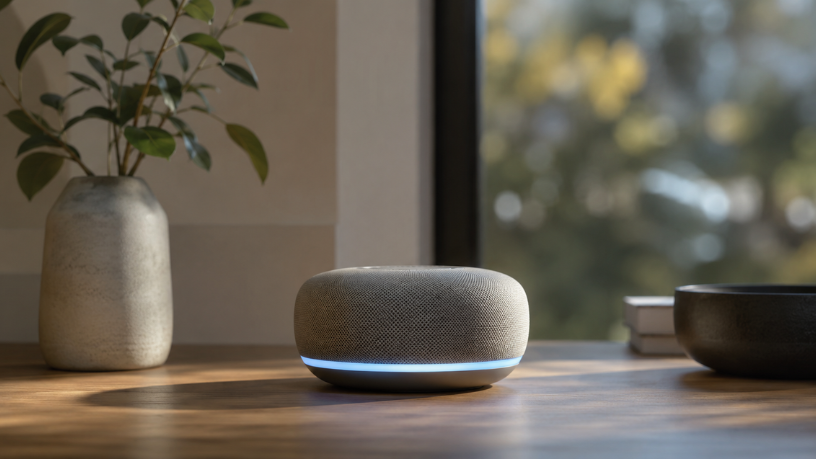
Reports suggest OpenAI’s first hardware product could take the form of a portable smart speaker equipped with cameras and environmental sensors that help the assistant better understand its surroundings. Instead of requiring users to type prompts, the device would rely heavily on voice conversations and contextual awareness to provide assistance throughout the day. The project also reflects OpenAI’s growing investment in consumer hardware following its acquisition of former Apple designer Jony Ive’s AI startup. Recent reporting indicates the company is aiming to build an entirely new category of AI-focused consumer device rather than simply competing with existing smart speakers. (Reuters)
This shift reflects a larger movement happening across the technology industry. AI companies increasingly want their products to function less like search engines and more like personal assistants capable of managing schedules, answering questions, controlling smart homes, drafting messages, organizing work, and helping users make decisions without requiring constant manual input.
For businesses, this evolution also creates new opportunities. Companies developing AI software, productivity platforms, home automation systems, healthcare services, and educational tools may soon be designing products that interact with AI companions instead of traditional apps. That could reshape software development just as smartphones transformed computing nearly two decades ago.
What could this mean for consumers, workers, and businesses?
If AI becomes embedded in dedicated devices instead of remaining confined to laptops and phones, everyday technology habits could change considerably. Voice interaction may become the primary interface for many common tasks, reducing the need to constantly switch between applications or search for information manually.
For workers, this could increase productivity by allowing AI assistants to handle scheduling, summarize meetings, prepare documents, organize research, and automate repetitive administrative work in the background. Small businesses could benefit from affordable digital assistants that help with customer communication, inventory management, marketing content, and financial organization without requiring specialized technical knowledge.
Consumers may also experience more personalized technology. AI assistants capable of understanding context could provide reminders based on location, suggest travel adjustments because of traffic, monitor household devices, or coordinate family calendars automatically. While many of these capabilities already exist in limited forms, advances in reasoning models and multimodal AI could make them significantly more useful and reliable.
At the same time, greater convenience raises important questions about privacy. Devices equipped with microphones, cameras, and sensors naturally collect more environmental information than traditional software. Consumers will likely pay closer attention to how companies store personal information, whether conversations remain private, and how much control users retain over the data collected inside their homes.
These concerns are becoming increasingly central as AI moves from an optional productivity tool toward a more persistent digital companion.
Why cybersecurity and regulation are becoming part of the AI conversation
As AI systems become more powerful and more deeply integrated into everyday infrastructure, governments are paying closer attention to their potential risks alongside their economic benefits.
This week, the White House announced a new coordination group intended to strengthen cybersecurity by bringing together leading AI developers and operators of critical infrastructure. The initiative focuses on sharing information about software vulnerabilities discovered through advanced AI systems while improving cooperation across sectors such as healthcare, finance, defense, and energy. Companies including OpenAI, Anthropic, Meta, Nvidia, and others are expected to participate in the effort. (Reuters)
For ordinary Americans, this development may seem distant from daily life, but its practical significance is considerable. Financial institutions, hospitals, utilities, transportation systems, and government agencies increasingly rely on complex digital infrastructure. As AI becomes capable of identifying software weaknesses faster than humans, it can serve both as a defensive tool and as a potential weapon if exploited by malicious actors.
The growing involvement of federal agencies also signals that AI policy is entering a new stage. Rather than focusing exclusively on innovation, policymakers are placing greater emphasis on security, accountability, and resilience. Businesses deploying AI will likely face expanding expectations around transparency, risk management, and cybersecurity preparedness.
Looking ahead, the biggest transformation may not come from any single AI model or hardware product. Instead, it will emerge from the gradual integration of AI into nearly every aspect of digital life. Consumers may interact with intelligent assistants throughout the day without consciously opening an app, businesses may automate increasingly complex workflows, and governments will continue developing frameworks designed to balance innovation with public safety. While many technical and regulatory questions remain unresolved, one trend is becoming increasingly clear: artificial intelligence is moving beyond being a tool people occasionally consult and toward becoming a permanent layer of the modern digital experience. The companies that successfully combine useful AI, trusted privacy protections, and seamless everyday interaction are likely to shape the next era of consumer technology, making the coming years one of the most important periods yet for the future of AI in America.
Sources
- Reuters – OpenAI’s first hardware device will be a speaker, Bloomberg News reports
https://www.reuters.com/technology/openais-first-hardware-device-will-be-speaker-bloomberg-news-reports-2026-07-14/ - Reuters – US to launch AI and cybersecurity coordination group, White House says
https://www.reuters.com/technology/us-launch-ai-cybersecurity-coordination-group-white-house-says-2026-07-14/ - The White House – White House Launches Gold Eagle Initiative for Unprecedented Cybersecurity Vulnerability Coordination
https://www.whitehouse.gov/releases/2026/07/white-house-launches-gold-eagle-initiative-for-unprecedented-cybersecurity-vulnerability-coordination/ - Bloomberg (via Bloomberg Law) – OpenAI’s First Device Will Be Speaker Built as AI Companion
https://news.bloomberglaw.com/artificial-intelligence/openais-first-device-will-be-speaker-built-as-ai-companion-1 - The Verge – OpenAI may announce a ChatGPT smart speaker this year
https://www.theverge.com/ai-artificial-intelligence/965670/openai-chatgpt-ai-smart-speaker-hardware-device