

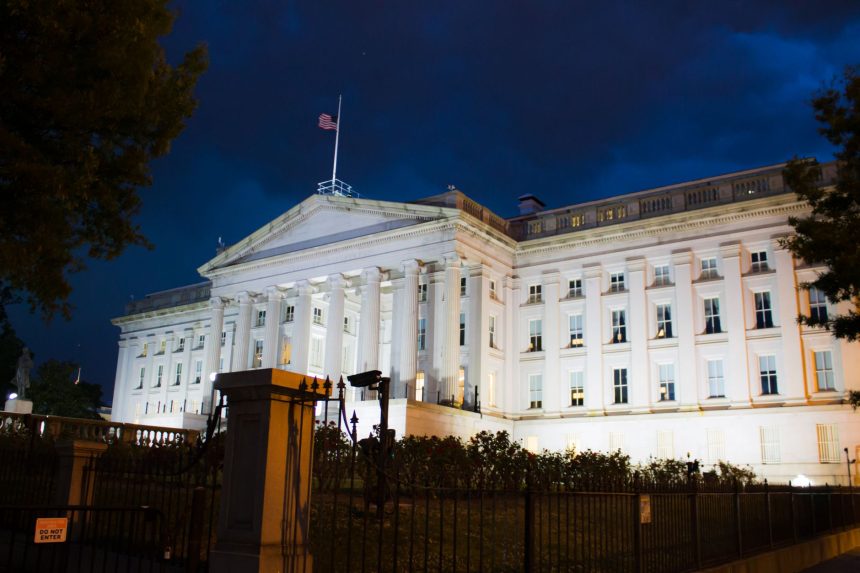
The U.S. Treasury plans to transition to a new system for auctioning government securities in the coming months, Deputy Treasury Secretary Francis Brooke said on September 22, 2026. The platform is in the final stages of testing and is intended to improve reliability, security and flexibility in the process the federal government uses to finance its operations.
Brooke announced the plan during the 2026 U.S. Treasury Market Conference, held at the Federal Reserve Bank of New York in Manhattan. According to the U.S. Department of the Treasury, the event brought together officials from the Treasury Department, the Federal Reserve, the Securities and Exchange Commission, the Commodity Futures Trading Commission and private financial institutions.
Why the auction system matters
Treasury auctions are a central part of the U.S. government’s borrowing process. Through these operations, the department sells securities to investors, raising funds to support federal activities and manage outstanding debt. The new system would update the infrastructure used for those transactions, although the Treasury has not announced a specific launch date beyond saying the transition is expected in the coming months.
The change comes as officials focus on the resilience of the Treasury market, one of the most important financial markets in the United States and a benchmark for assets around the world. The Treasury said the market has approximately $32 trillion in marketable debt outstanding, with average secondary-market trading volumes of about $1 trillion per day.
In practical terms, a more reliable auction platform could be important for the government, financial institutions and investors that participate in or depend on Treasury transactions. The announcement, however, describes an infrastructure change rather than a measure that would by itself resolve broader concerns about federal borrowing, inflation or interest rates.
Buybacks approach $500 billion
Brooke also said the Treasury had repurchased nearly $500 billion in government securities through more than 150 buyback operations. The program has two broad purposes: supporting liquidity in less-traded securities and helping manage fluctuations in the government’s cash balances and short-term bill issuance.
Buybacks differ from new debt issuance. In an auction, the government sells securities to raise financing. In a buyback, the Treasury purchases previously issued securities from the market. The operation can help improve trading conditions for certain bonds and give the department another tool for managing its debt portfolio and cash needs.
The Treasury has also increased the maximum size of some longer-term bond buyback operations. Effective September 9, 2026, selected operations covering securities with maturities between 10 and 20 years and between 20 and 30 years were increased from $2 billion to at least $4 billion per operation. The measure is scheduled to remain in place through November 4, 2026, according to the department’s official announcement.
Impact on borrowing costs and global markets
Treasury yields influence financing conditions across the U.S. economy. Mortgage rates, corporate borrowing costs and other forms of credit are affected by movements in government bond yields, although the relationship is shaped by multiple economic and market factors. For households and businesses, changes in Treasury-market conditions can therefore influence the broader cost of borrowing.
The market also matters beyond the United States. Treasury securities are widely used by global investors, banks and financial institutions, while dollar-denominated assets play a major role in international finance. For Brazilian readers, shifts in U.S. Treasury yields can affect investment flows, the cost of dollar financing and expectations about the dollar’s strength. Those effects should be treated as market context, not as guaranteed results of the new auction system.
The Associated Press reported in August that investors remained concerned about the scale of U.S. government borrowing, inflation and the limits of buybacks alone to permanently reduce long-term interest rates. That context places the Treasury’s infrastructure and buyback measures within a larger debate over debt management and the outlook for the bond market.
A broader effort to strengthen Treasury-market infrastructure
The new auction platform and expanded buyback operations are separate measures, but both form part of the Treasury’s broader effort to improve the functioning of the government securities market. The auction system is focused on the process used to sell new securities, while buybacks address previously issued debt and liquidity conditions in the secondary market.
The next stage will be the completion of testing and the transition to the new platform. Until the Treasury provides further details, the announcement establishes the direction of the change but does not indicate how the system will affect auction results, borrowing costs or the dollar. Its importance lies in the scale of the market it supports and in the central role Treasury securities play in the U.S. and global financial systems.