

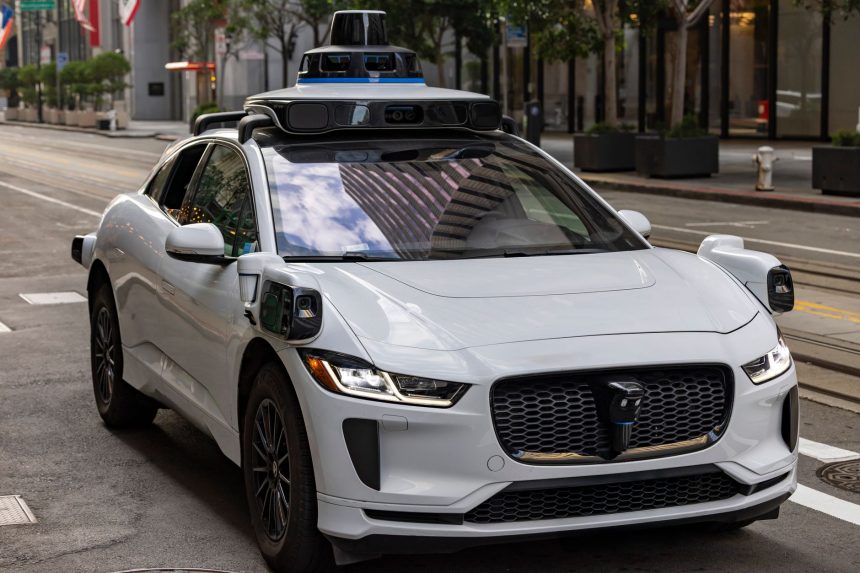
The U.S. Department of Transportation announced a national strategy for automated vehicles on September 3, 2026, establishing federal priorities for the technology through fiscal year 2030. The roadmap is designed to guide the development, testing and deployment of automated passenger and freight vehicles while addressing the regulatory challenges created by the rapid evolution of autonomous transportation.
According to the U.S. Department of Transportation, the strategy is organized around four broad objectives: strengthening safety oversight, providing greater regulatory certainty, supporting American innovation and improving interoperability among states. The initiative places Washington at the center of efforts to create a more consistent national framework for automated vehicles.
Federal priorities for automated transportation
One of the central proposals is the development of the first federal safety standards specifically focused on automated vehicle competency. The objective is to establish clearer expectations for how these systems should perform and be evaluated, while maintaining federal oversight of vehicles operating on public roads.
The strategy also calls for the modernization of existing vehicle regulations. The Transportation Department says that updating those rules could remove requirements that are no longer appropriate for emerging automated technologies, as well as eliminate unnecessary barriers to testing and deployment. The approach is intended to provide manufacturers and technology developers with more predictable conditions as they bring new systems to market.
The department’s announcement highlights both passenger and freight applications. That includes the development of autonomous vehicles for transportation services, such as robotaxis, as well as automated trucks and other commercial systems designed to support the movement of goods. The federal roadmap therefore links autonomous mobility to the automotive industry, logistics and the wider U.S. technology sector.
Addressing a fragmented regulatory environment
The United States has faced a regulatory environment in which requirements for automated vehicles can differ across federal, state and local authorities. Such differences may complicate testing, certification and commercial deployment, particularly for vehicles intended to operate across state lines.
The national strategy seeks to improve consistency without removing safety oversight. By promoting interoperability between states, the Transportation Department aims to establish conditions in which automated vehicles can operate under more compatible rules throughout the country. The proposal does not eliminate the role of public authorities; instead, it presents federal coordination as a way to reduce uncertainty and clarify responsibilities.
The Transportation Department’s announcement describes the strategy as part of a broader effort to support innovation and expand the use of automated vehicles in the United States. Its implementation will cover activities planned and underway for fiscal years 2026 through 2030.
Safety remains a key condition for deployment
The push for nationwide deployment comes with an emphasis on safety rules. The National Highway Traffic Safety Administration has also outlined regulatory updates involving automated vehicles, reinforcing the federal role in establishing safety expectations for emerging transportation systems.
For the industry, clearer standards could make it easier to plan investments, conduct testing and determine how automated vehicles should meet federal requirements. For regulators and the public, the challenge will be ensuring that rules keep pace with new technologies while preserving accountability for vehicles operating on public roads.
The strategy does not focus on a single company or technology. Instead, it establishes a federal policy direction for a sector that includes vehicle manufacturers, software developers, logistics providers and transportation authorities. Its results will depend on how the proposed priorities are translated into standards, regulatory changes and coordination with states.
Implications for the U.S. technology and transportation sectors
Automated vehicles connect several strategic areas of the American economy, including Silicon Valley innovation, automotive manufacturing, freight transportation and infrastructure. A national framework could influence the pace at which companies develop and deploy autonomous systems, as well as the conditions for competition in the U.S. market.
The policy may also be followed by governments and companies outside the United States. Brazil and other countries evaluating rules for robotaxis, autonomous freight and advanced driver-assistance technologies could monitor the American approach as it develops. Any influence on international standards or partnerships, however, will depend on the implementation of the U.S. roadmap and on decisions made by other jurisdictions.
With its 2026–2030 timetable, the national strategy gives federal agencies and the private sector a defined period for advancing automated vehicle policy. The immediate task is to balance innovation and commercial expansion with consistent safety oversight, particularly as autonomous passenger and freight systems seek to move beyond limited testing environments and operate more broadly across the United States.