

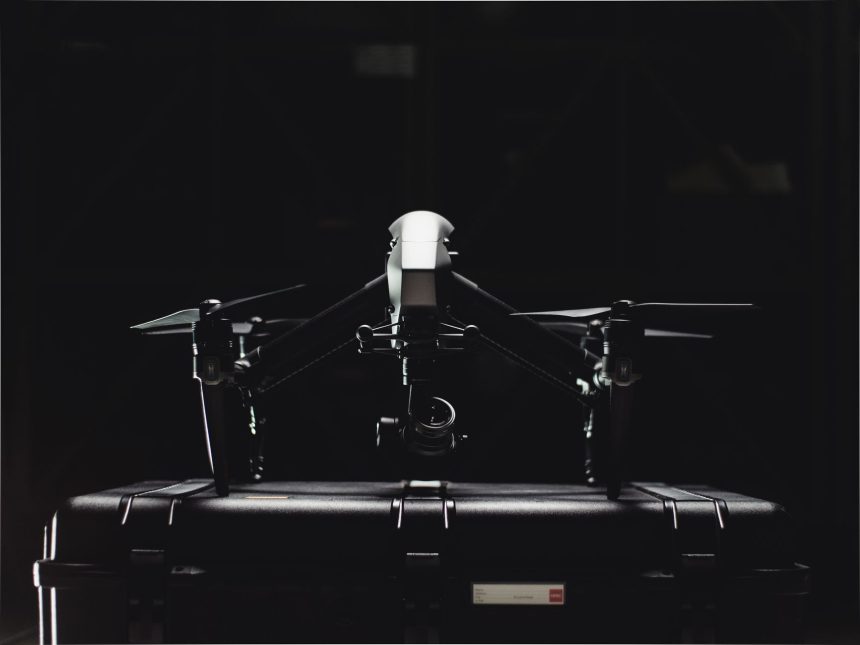
The United States has imposed tariffs of up to 100% on selected imported drones, docking stations and critical unmanned-aircraft components. The policy was established through a presidential proclamation signed on August 13, 2026, published in the Federal Register on August 19, and became effective for covered imports on September 3.
The measure is part of a broader effort by the administration to reduce dependence on foreign suppliers, encourage production in the United States and address national-security concerns linked to drone technology. The new duties affect different product categories at different rates, with the highest tariff applying to certain larger aircraft, thermal-imaging drones, docking stations and specified components.
Which drones and components face the highest tariffs
According to the White House, drones covered by the policy may face a 25% duty when they fall into smaller categories. The tariff can rise to 100% for unmanned aircraft weighing more than 25 kilograms, aircraft equipped with thermal-imaging capabilities, docking stations and certain critical parts.
The policy also creates different maximum combined rates for products from some U.S. allies. Covered goods from Japan, South Korea, Taiwan, Switzerland, Liechtenstein and the European Union may qualify for a maximum combined rate of 15%. Products from the United Kingdom may qualify for a maximum rate of 10%, provided that the relevant critical components and technology meet the administration’s origin requirements.
These rates do not apply automatically to every drone or component from those markets. Eligibility depends on the product category and compliance with the origin conditions established by the administration. The classification of individual products will therefore remain important for companies importing aircraft, batteries, motors, electronic systems and related equipment.
National security and supply-chain concerns
The administration’s rationale is based on the strategic role of unmanned aircraft in several areas of the U.S. economy and public infrastructure. The Commerce Department investigation cited military operations, infrastructure protection, agriculture, emergency response, telecommunications, transportation and scientific research as fields in which drone technology has become important.
The Federal Register states that foreign dependence can create supply-chain and national-security risks. The proclamation argues that expanding domestic production would give the United States greater control over technologies considered strategically significant.
At the same time, the policy recognizes that American drone manufacturers may also rely on international suppliers. Motors, batteries, electronic speed controllers and other components used in U.S.-made aircraft can come from abroad. As a result, the tariffs could affect domestic producers that assemble drones in the United States but still depend on imported parts.
Potential effects on companies and public agencies
The new duties are intended to make domestic manufacturing more competitive, but they may also increase costs for companies and government agencies that purchase imported aircraft or components. Drone users in agriculture, infrastructure inspection, emergency services and research could face higher acquisition expenses when products fall within the covered categories.
The available sources establish the tariff rates and the administration’s objectives, but they do not provide evidence of broader market effects, such as changes in retail prices, employment or drone availability. Those consequences will depend on how importers, manufacturers and buyers respond to the new rules.
The proclamation also authorizes the administration to add more components to the tariff regime if it determines that imports continue to present a national-security risk. That provision leaves open the possibility of future changes to the list of covered products.
Timeline and implications for international suppliers
The initial proclamation was signed on August 13, 2026, and formally published six days later. Tariffs on the covered drones and components took effect on September 3. A separate 25% tariff on additional components is scheduled to begin on February 9, 2027, unless the policy is modified or replaced.
The decision may require foreign manufacturers and exporters to reassess product classification, sourcing and pricing for the U.S. market. Brazilian companies that sell drones or components to the United States could also need to examine how the rules apply to their products, although the available information does not establish a specific impact on Brazilian exporters.
For Washington, the policy links trade restrictions with industrial and security objectives. Its immediate effect is to raise the cost of selected imports, while its longer-term goal is to encourage a stronger domestic supply chain for unmanned aircraft and the technologies that support them.
Sources and verification
This report is based on the presidential proclamation published by the White House, the official notice in the Federal Register and product-category reporting by Tom’s Hardware.