

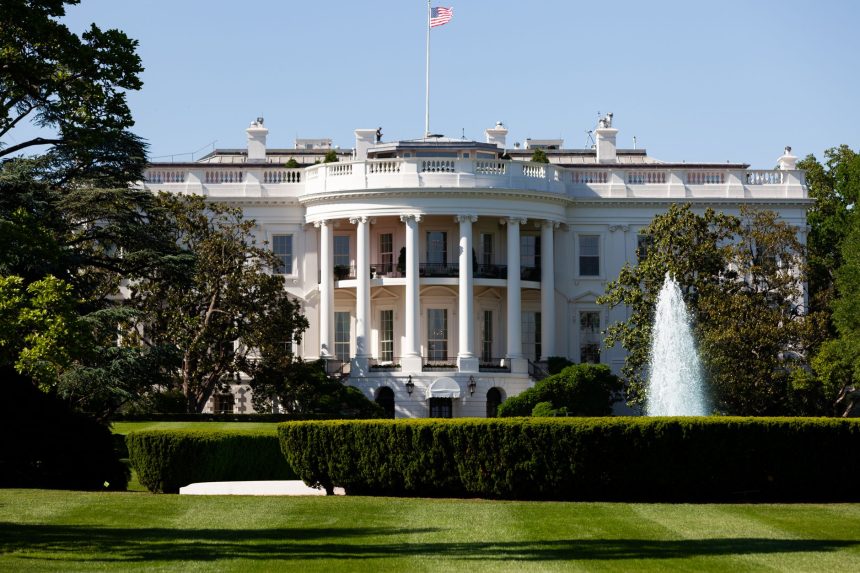
Chinese President Xi Jinping’s state visit to Washington has placed trade, artificial intelligence and strategic stability at the center of the most consequential relationship in U.S. foreign policy. Xi arrived in the United States on September 23, 2026, at the invitation of President Donald Trump, with the formal White House program beginning the following day.
The September 24 arrival ceremony and state events marked Xi’s first state visit to the United States in more than a decade, according to the Chinese Ministry of Foreign Affairs. The highly formal setting underscored the importance of the meeting, even as Washington and Beijing continue to face disputes over technology, supply chains, security and market access.
A diplomatic effort to prevent renewed escalation
The visit comes as both governments seek to keep competition from turning into a broader confrontation. Trade, artificial intelligence, Iran and Taiwan were among the issues included in the discussions, according to the Associated Press.
The agenda reflects the breadth of the relationship. Washington and Beijing remain strategic rivals, but their economies are closely connected. Decisions involving tariffs, export controls, industrial production and access to key materials can affect companies and consumers far beyond the negotiating rooms in Washington and Beijing.
For the Trump administration, engagement with Xi offers an opportunity to pursue stability while maintaining pressure on issues considered central to U.S. economic and national security policy. For Beijing, the talks provide a channel to address restrictions affecting Chinese access to advanced technologies and to seek progress on earlier understandings between the two countries.
Artificial intelligence adds a new layer to the rivalry
Artificial intelligence has emerged as one of the clearest examples of how competition and cooperation now overlap. U.S. Treasury Secretary Scott Bessent said Washington had proposed an artificial-intelligence incident notification mechanism in discussions with Chinese officials before the summit, the Associated Press reported.
Such a mechanism would connect the development of advanced AI systems to questions of crisis management and strategic stability. The proposal places AI in a category that extends beyond commercial competition, linking the technology to the risk of unexpected incidents and the need for communication between two governments with competing security interests.
At the same time, the broader technology dispute remains unresolved. The United States has imposed controls affecting advanced computing and semiconductors, while China has sought to strengthen its own technological capabilities. The result is a contest over innovation, industrial capacity and access to the infrastructure needed to develop increasingly powerful AI systems.
Trade tensions remain important for American businesses
The economic consequences of the meeting are likely to be felt across multiple sectors of the U.S. economy. Trade restrictions and the uncertain future of the bilateral relationship affect technology companies, chipmakers, manufacturers, farmers and firms that depend on global supply chains.
Critical minerals are another source of leverage. The Associated Press reported that China’s position in critical-mineral markets has contributed to negotiations with Washington. These materials are important to several industrial and technological applications, making supply disruptions a concern for companies planning investment and production.
The two countries are also working within a fragile trade truce. Agricultural exports, aircraft sales, semiconductor controls and access to advanced computing technology remain central to the economic relationship. Progress in one area could ease pressure, but a breakdown in negotiations could quickly renew uncertainty for American businesses and investors.
Why the visit matters in Washington
The state visit gives the White House a highly visible opportunity to manage tensions with Beijing while addressing issues that directly affect American competitiveness. The official program included a formal arrival ceremony and a state dinner, according to the White House.
For Silicon Valley and the wider technology sector, the most important question is whether diplomatic engagement can create clearer rules around advanced computing and AI without reducing Washington’s ability to protect sensitive technologies. For manufacturers and consumers, the focus is whether the talks can limit tariffs, supply-chain disruptions and sudden changes in access to Chinese goods or materials.
The visit does not resolve the fundamental differences between the United States and China. Instead, it demonstrates the need for continued communication at a moment when economic interdependence coexists with intense strategic rivalry. The outcome will be measured not only by the symbolism of the White House ceremony, but also by whether the two governments can keep trade and technology disputes from escalating into a wider crisis.