

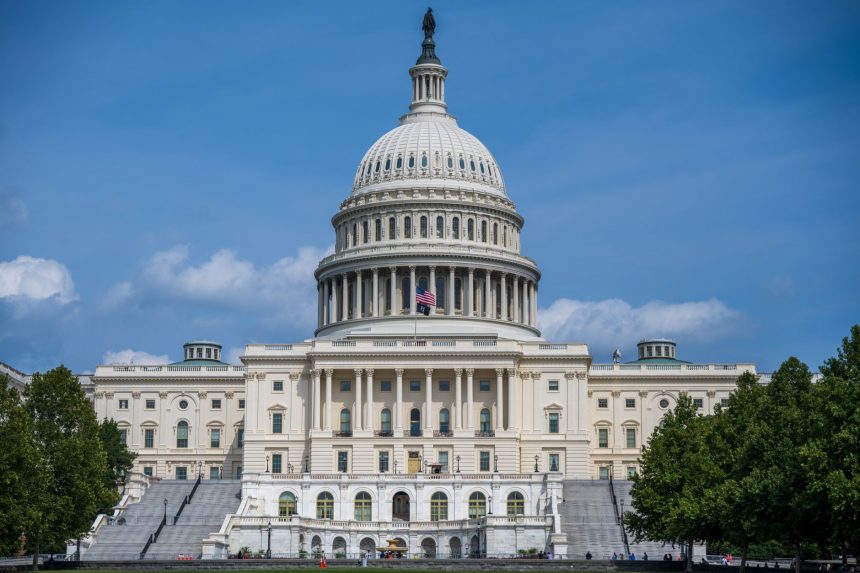
The U.S. Senate has blocked a procedural motion to advance legislation that would establish a broad federal framework for cryptocurrency markets, leaving the future of digital-asset regulation uncertain in Washington. The vote on September 15 stopped the Digital Asset Market Clarity Act, known as the CLARITY Act, from moving forward.
According to the U.S. Senate official record, the motion received 49 votes in favor and 50 against. Because the measure required 60 votes to advance, the result represented a significant setback for lawmakers and cryptocurrency companies seeking clearer rules for issuing, trading and classifying digital assets.
Why the CLARITY Act failed
The legislation was designed to clarify the federal regulatory structure for digital commodities and define the respective roles of the Securities and Exchange Commission and the Commodity Futures Trading Commission. Supporters argued that a clearer division of responsibilities could reduce uncertainty for exchanges, technology companies and other participants in the crypto industry.
Democrats, however, opposed moving ahead without stronger ethics safeguards related to President Donald Trump’s personal and family financial interests in cryptocurrency. The dispute placed the bill at the intersection of financial regulation, presidential conflicts of interest and campaign financing, according to the Associated Press.
The disagreement also showed why crypto legislation has become politically difficult in the United States. The measure was not debated only as a technical effort to organize oversight of digital assets. It was also connected to questions about whether federal policy could affect financial interests linked to the president and his family.
What the Senate vote means for the crypto industry
Without congressional action, the United States continues to lack the comprehensive market-structure framework sought by the bill. That uncertainty affects companies trying to determine which federal agency would oversee particular activities and how digital assets should be treated under existing financial rules.
The failure to advance the CLARITY Act may also complicate planning for cryptocurrency exchanges, token issuers, financial institutions and technology firms. A legislative framework could have provided more durable standards, but the Senate vote leaves those questions subject to further negotiations, agency decisions and potential legal disputes.
Coverage by Reuters described the vote as a failure to advance sweeping cryptocurrency legislation and highlighted its consequences for the industry. For digital-asset businesses, the immediate issue is not only whether Congress will revisit the bill, but also how regulators will respond while lawmakers remain divided.
SEC seeks a temporary path forward
Two days after the Senate vote, the SEC announced a temporary “Innovation Exemption” for certain tokenized securities venues and liquidity providers. In a September 17 statement, SEC Chairman Paul S. Atkins said the measure was intended to encourage innovation while preserving investor-protection and anti-fraud requirements.
The agency’s action offers a limited administrative response to some of the market’s regulatory concerns, but it does not replace legislation. An exemption issued by the SEC can provide conditional relief within the agency’s authority, while a law passed by Congress could establish a broader and more lasting structure for digital-asset markets.
The temporary nature of the SEC initiative also means that its effects may depend on future regulatory decisions, political changes and legal challenges. It may help some tokenized securities platforms operate under clearer conditions, but it cannot resolve every question addressed by the CLARITY Act or settle the division of authority between federal regulators.
Implications for U.S. financial policy
The Senate vote extends a regulatory gap at a time when cryptocurrency remains connected to the American technology sector, investment markets and financial infrastructure. The outcome is particularly relevant to Silicon Valley companies and financial firms developing tokenized products, as well as to global businesses that interact with U.S. markets.
For investors, the result signals that the rules governing digital assets may continue to evolve through a combination of agency action, congressional negotiations and court challenges rather than through one comprehensive statute. That can make compliance planning more difficult and leave market participants watching both Washington and the SEC for additional guidance.
The consequences also reach beyond the United States. American decisions influence international crypto companies, investors and regulators, including those in Brazil. The absence of a durable federal framework could affect how the United States competes with other financial centers and pursues its goal of remaining a leader in digital finance.
For now, the CLARITY Act remains stalled after the September 15 procedural vote. The SEC’s Innovation Exemption provides a temporary bridge for specific activities, but the broader future of U.S. crypto regulation still depends on whether Congress can resolve the political and ethical disputes that prevented the bill from advancing.