

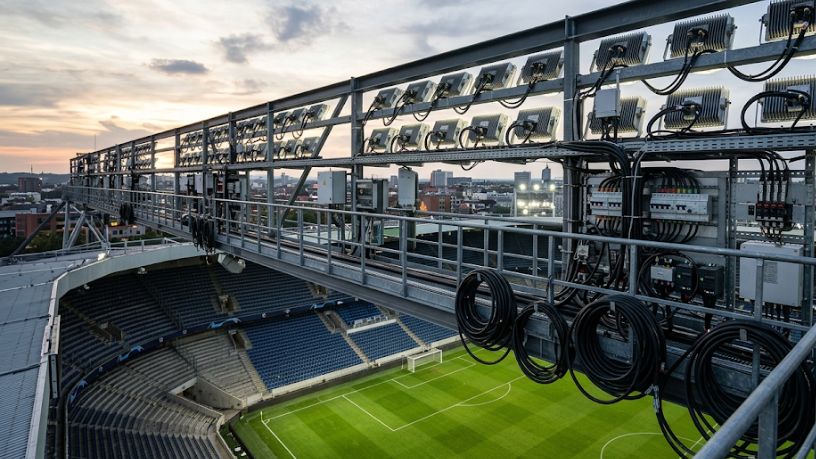
From the perspective of Matheus Vinicius Voigt, an electrical engineering professional, large football stadiums function as miniature cities, requiring electrical systems of extraordinary complexity to ensure broadcast transmissions, spectator safety, and an adequate playing experience.
Modern stadium lighting goes far beyond simply illuminating the pitch; it involves sophisticated electrical project management that integrates cutting-edge LED technology, backup systems, and intelligent power control. To understand how electrical engineering has transformed professional football in Brazil and around the world, continue reading and discover all the technical details that make the contemporary sporting spectacle possible.
What is the technical complexity of modern sports lighting?
The answer lies in the rigorous requirements imposed by international competitions. According to Matheus Vinicius Voigt, elite-category football stadiums must meet illuminance standards ranging between 1,400 and 2,000 lux, depending on the nature of the broadcast and the competition in question. This lighting uniformity is not just about the quantity of light, but about quality, distribution, and the absence of glare that could impair players, fans, and broadcast cameras. The engineer clarifies that any large-scale technical failure not only compromises the game but also affects multi-billion dollar commercial agreements with television networks.
Electrical project management in stadiums involves the installation of hundreds of floodlights strategically positioned in the upper structures. The transition from halogen technology to LED systems has revolutionized this reality by reducing energy consumption by up to 70% while maintaining or improving light quality. Furthermore, LEDs allow for instant switching on and off, which is essential for broadcast events that require rapid lighting changes as needed.
How does energy efficiency benefit clubs economically?
The numbers are significant for institutions that manage large sports complexes. As Matheus Vinicius Voigt highlights, a stadium with 60,000 spectators and a completely modernized lighting system can save between 500,000 and 1 million reais annually in operational energy costs. This reduction not only improves the clubs’ financial margins but also makes investments in other critical areas feasible, such as infrastructure maintenance and the development of youth squads.
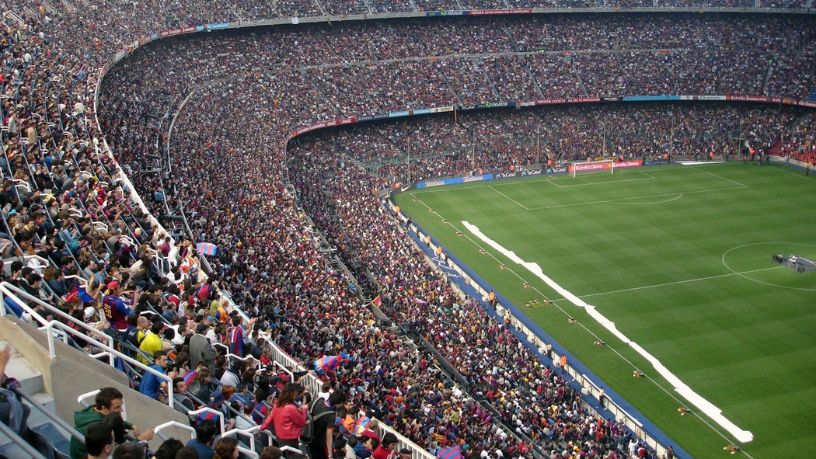
The expert points out that efficiency is not just a matter of immediate savings. The reduction in carbon emissions associated with lower energy consumption strengthens the clubs’ institutional image, attracting sponsors who are conscious of environmental responsibility.
What are the technical challenges in implementing these systems?
The transition to LED lighting in existing stadiums presents relevant obstacles. In the assessment of electrical project management expert Matheus Vinicius Voigt, compatibility with legacy electrical infrastructure, electromagnetic interference issues during live broadcasts, and the need to maintain operational safety during games make these projects extraordinarily complex. The project manager emphasizes that any sizing error or planning failure can result in a partial blackout during matches, causing exponential financial losses and damage to institutional reputation.
The synchronization of multiple independent electrical circuits, each feeding different areas of the stadium, requires engineering precision that leaves no room for error. Redundant power supply systems must be operational to ensure that any failure in a main circuit does not compromise the broadcast or the safety of those present. This redundancy considerably increases the initial cost of the project, but it is non-negotiable in large-scale structures.
Continuous innovation redefining professional football
Modern stadiums are no longer just stages for competitions, but technology hubs that demonstrate the most advanced developments in electrical engineering. The implementation of intelligent lighting management systems, with real-time remote control and automatic adjustment based on weather conditions, marks the next frontier for the sector.
As Matheus Vinicius Voigt concludes, clubs and federations that invest in sophisticated electrical project management will not only be meeting current demands but building infrastructures capable of sustaining world-class football for decades to come.
Author: Diego Rodríguez Velázquez