

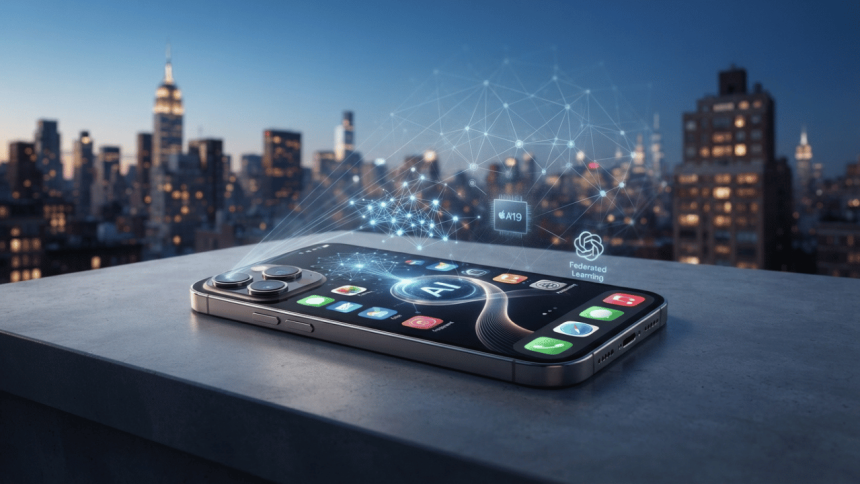
Apple’s latest iPhone generation is turning the smartphone into a more active digital assistant, with artificial intelligence becoming one of the main reasons consumers may consider upgrading. The company introduced the iPhone 18 Pro and iPhone 18 Pro Max on September 9, alongside new developments around Apple Intelligence and its broader software ecosystem.
For consumers, however, the important question is not simply what is new inside the phone. The bigger issue is how much these technologies can actually change everyday activities such as communication, photography, productivity, information searches and managing personal data. Apple is increasingly positioning AI as something integrated into the operating system rather than a separate application that users open when they need it.
That shift could affect how people work, study, shop and interact with their devices. It also raises practical questions about privacy, hardware requirements, software support and whether the newest AI capabilities will make older smartphones feel outdated faster.
Why is Apple putting so much emphasis on AI in the iPhone 18 Pro?
The iPhone 18 Pro arrives at a moment when artificial intelligence is moving from standalone chatbots into everyday software. Instead of requiring users to open a dedicated AI application, technology companies are increasingly embedding models directly into operating systems, cameras, browsers, productivity tools and messaging services. Apple’s recent announcements show that it intends to make this approach a central part of the iPhone experience.
This matters because smartphones already contain much of the information people use throughout the day. Messages, photos, calendars, documents, contacts, locations and browsing activity can all provide context for digital assistants. The potential advantage is convenience: an AI system that understands what is already happening on a device can potentially reduce the number of steps required to complete routine tasks.
Apple’s broader Apple Intelligence strategy is particularly relevant here. The company has described a system designed to work across its hardware and software ecosystem, while emphasizing privacy as part of the architecture. The next generation of Apple Intelligence announced this month is designed to operate across the iPhone, iPad, Mac, Apple Watch and Vision Pro, creating a more interconnected approach to AI-powered features.
For American consumers, that could eventually change the definition of a smartphone upgrade. Camera improvements, processor performance and battery life have traditionally been major reasons to buy a new model. Increasingly, access to advanced AI capabilities may become another factor, particularly when newer processors are required to run sophisticated features efficiently.
The development also has implications for businesses and workers. A smartphone capable of summarizing information, organizing communications, assisting with documents or interacting with applications could become a portable productivity tool rather than simply a communication device. That does not mean every user will benefit equally, but it creates another area where digital skills may become increasingly important.
What could the new iPhone change for everyday consumers?
One of the most important changes is the growing ability of AI assistants to understand context rather than simply respond to isolated commands. Apple says its new Siri AI can understand personal context, interact with information displayed on the screen and perform actions across applications. The company has also demonstrated examples involving information from messages, emails and photos, moving the assistant closer to an operating-system-level tool.
That distinction could be significant for ordinary smartphone users. Consider someone trying to organize a trip, find information buried in a conversation or complete a routine digital task. Instead of manually opening several applications, copying information and switching between screens, a more capable assistant could potentially coordinate some of those steps. The benefit is not necessarily a dramatic new invention, but a reduction in small amounts of friction that accumulate throughout the day.
Photography is another area where AI can have an immediate consumer impact. Modern smartphones already use computational photography to process images, improve low-light performance and combine multiple exposures. As AI becomes more deeply integrated into photo editing, users can expect software to play an even larger role in adjusting, organizing and transforming images after they are captured.
The practical consequence is that smartphone ownership may become increasingly dependent on software capabilities rather than specifications alone. Two phones with similar cameras or displays could provide very different experiences if one has access to substantially more advanced AI tools. That creates an incentive for consumers to pay attention not only to hardware specifications, but also to how long a manufacturer intends to support a device.
There is also a privacy dimension that consumers should not overlook. AI assistants become more useful when they have access to more context, but that usefulness can create legitimate questions about what information is processed locally, what may be sent to cloud-based systems and what controls users have over personal data. Apple has repeatedly emphasized privacy in its AI architecture, but consumers should still examine the settings and limitations of individual features rather than assuming that every AI operation works in exactly the same way.
Will AI make the iPhone 18 Pro more important for work and the future?
The significance of the iPhone 18 Pro extends beyond consumers who want the newest hardware. As AI assistants become integrated into everyday devices, smartphones could increasingly function as personal interfaces for work, education and digital services. This follows a broader technology trend in which AI is being incorporated into existing workflows rather than treated as a separate destination.
For workers, that could mean faster access to information, easier communication and greater automation of repetitive activities. For entrepreneurs and small businesses, smartphones could become more capable tools for creating content, communicating with customers and managing administrative tasks. The important variable will be whether these features actually save time and improve results, rather than simply adding another layer of technology to an already crowded digital environment.
The rollout also illustrates why AI skills are becoming relevant outside traditional technology careers. A person does not need to be a programmer to benefit from understanding how AI assistants work, what information they can access, how to verify their output and which tasks should remain under human control. As AI becomes embedded in consumer products, basic AI literacy may become as practical as knowing how to use cloud storage, search engines or mobile banking.
Apple’s strategy also suggests that competition in smartphones is increasingly shifting toward ecosystems. The company is not selling only a phone, but a connected collection of hardware, software and services. That approach can encourage consumers to remain within a particular platform because the usefulness of one device can increase when combined with other products from the same ecosystem.
The next stage will depend on how quickly these capabilities become reliable and broadly available. Apple has already indicated that some advanced Apple Intelligence features have usage limits and that availability can vary by device, language and region. That means consumers should distinguish between features announced by a company and features they can actually use on a specific phone at a specific time.
The iPhone 18 Pro therefore represents more than another annual smartphone upgrade. It is part of a larger shift toward devices that anticipate tasks, understand context and use AI to connect different pieces of a person’s digital life. Over the coming months, the real test will be whether those capabilities become dependable enough to change daily habits, or remain features that consumers occasionally experiment with. For American workers, students, families and businesses, that distinction could determine whether AI becomes a meaningful productivity tool or simply another layer of smartphone complexity. Apple’s continued software updates, developer adoption and consumer response will be key indicators of what comes next.
Sources:
- Apple: iPhone 18 Pro and iPhone 18 Pro Max (Apple)
- Apple: Major updates for Apple software platforms —(Apple)
- Apple Brasil: Nova geração da Apple Intelligence — (Apple)
- Reuters: Five takeaways from Apple’s 2026 product showcase — (reuters.com)
- Reuters: Apple shows off AI-focused iPhone 18 Pro — (theprint.in)