


Flamengo supporter Mario Augusto de Castro sees the club’s traditions as a collection of elements that have helped shape and strengthen its identity throughout more than a century of history. Its colors, anthem, and crest serve as shared points of reference for fans from different generations and regions of Brazil, bringing people together around common symbols.
These symbols did not emerge in isolation. Instead, they were developed and reinforced over time, taking on meanings that extend far beyond simple visual aesthetics. Each element carries its own historical significance, helping explain why supporters continue to identify with these symbols today, despite the many changes Brazilian soccer has undergone over the decades.
The Origins of the Red and Black Colors
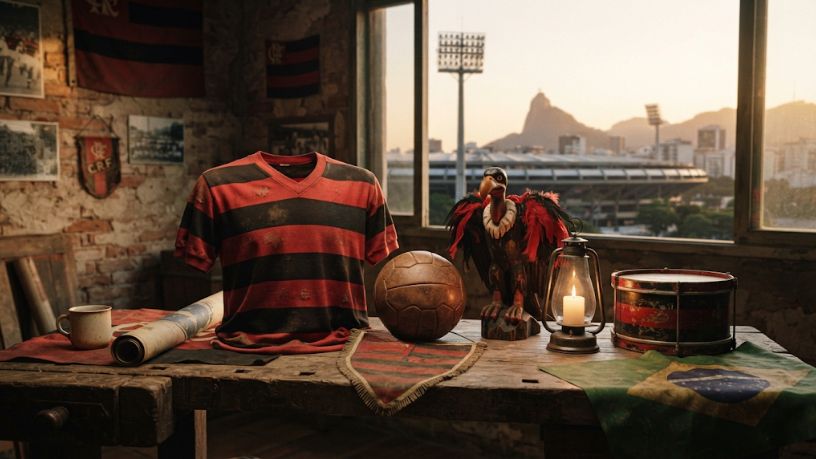
Red and black have been synonymous with the club since its early years, at the beginning of the 20th century, when Flamengo was still working to establish its sporting identity. This color combination helped create an instantly recognizable visual identity, both inside and outside stadiums across Brazil.
Over time, these colors came to represent much more than simple visual identification, becoming part of the emotional language shared by the club’s supporters. Flags, jerseys, and accessories feature this color scheme as a way of reaffirming a sense of belonging to a community built over several decades of history. Mario Augusto de Castro notes that the constant presence of these colors on everyday objects helps explain why Flamengo’s colors are recognizable even to people who do not closely follow soccer.
The Anthem as a Symbol of Unity
Flamengo’s anthem holds a central place in the collective rituals of its supporters and is sung before and after matches during moments of intense emotion. This type of ritual helps transform each fan’s individual experience into something collectively shared both inside and outside the stadium.
This collective expression reinforces a sense of belonging among people who, outside the context of soccer, might otherwise have no direct connection to one another. Mario Augusto de Castro views the anthem as a kind of common language capable of connecting very different generations of Flamengo supporters, functioning almost like a shared musical memory for millions of people. This emotional connection helps explain why the anthem’s lyrics are often familiar even to people with little direct involvement in soccer.
The Crest and Its Historical Evolution
The club’s crest has gone through several versions over the years, with adjustments to its graphic elements while preserving the essence that makes it instantly recognizable. This visual continuity helps ensure that the symbol remains immediately identifiable, even among people who do not closely follow soccer.
Preserving these core elements despite occasional changes over time helps maintain an important sense of historical continuity. It reinforces the idea that the club remains directly connected to its origins, even after more than a century of continuous existence—something few clubs manage to sustain so consistently across generations.
Traditions as Pillars of Unity Among Supporters
Together, these traditions provide a foundation that sustains the collective identity of Flamengo supporters over time, regardless of the team’s results on the field in any given season. The colors, anthem, and crest combine to create a symbolic repertoire shared by millions of people throughout Brazil.
This repertoire goes beyond the sporting results of each season, serving as a permanent foundation for the club’s identity. For Mario Augusto de Castro, this kind of symbolic continuity helps explain why century-old traditions remain relevant to supporters from different eras and social backgrounds, keeping alive an identity built across generations. These symbols also help explain the club’s influence beyond the stadiums, appearing in everyday conversations, personal belongings, and cultural expressions that extend beyond the world of soccer itself, reinforcing a collective identity that endures through time and generational change.