

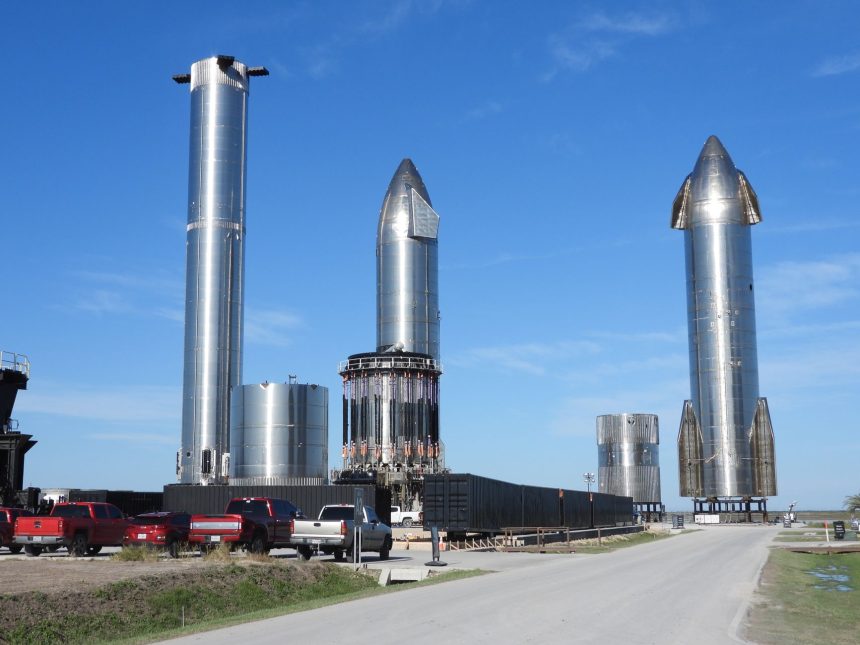
SpaceX’s Starship reached Earth orbit for the first time on September 28, 2026, in a landmark test flight that advanced the company’s plans for a reusable transportation system serving Earth orbit, the Moon and Mars. Flight 14 lifted off from SpaceX’s Starbase facility in Cameron County, South Texas, near the Gulf Coast and the city of Brownsville.
The achievement was significant, but the mission did not unfold exactly as planned. One of Starship’s engines shut down during the flight, and the spacecraft returned to Earth earlier than expected. Even so, the vehicle completed the program’s first orbital insertion maneuver and deployed its first group of next-generation Starlink satellites, according to Reuters reporting.
The result places Starship at an important turning point. Earlier integrated flight tests followed suborbital trajectories, while Flight 14 was designed to send the spacecraft into low Earth orbit before a planned reentry over the Pacific Ocean. Reaching orbit demonstrates progress in the vehicle’s propulsion, flight-control and mission systems, while the engine failure and early conclusion show that the spacecraft remains an experimental platform.
A first orbital milestone for Starship
SpaceX has positioned Starship as a fully reusable launch and transportation system capable of supporting a range of missions. The architecture is intended to move cargo and, eventually, people beyond Earth, with potential applications involving orbital launches, lunar exploration and longer-term missions to Mars.
According to The Associated Press, Flight 14 became the first Starship mission to reach orbit. The vehicle’s orbital insertion was therefore the central technical objective of the test, even though the flight was not completed according to its full plan.
SpaceX’s own Starship Flight 14 mission information describes the launch as part of the company’s effort to develop rapid reusability and increase launch frequency. The company’s launch records identify the mission as completed and list the vehicle as expended, underscoring that the flight was a developmental test rather than an operational service.
Engine issue limited the mission
The loss of an engine during the flight did not prevent Starship from reaching orbit, but it affected the mission’s duration and scope. The spacecraft returned to Earth before all planned objectives could be carried out, limiting the amount of data available from the later stages of the test.
That distinction is important for assessing the result. Starship achieved a major orbital milestone, but the flight should not be described as an unqualified success. The engine shutdown and early end of the mission indicate that the system still requires additional testing before it can be considered reliable for routine commercial or crewed operations.
At the same time, the flight generated information that can help SpaceX identify technical problems and refine future vehicles. Testing complex launch systems under flight conditions is central to the company’s iterative development approach, particularly for a spacecraft designed to be reused at a high rate.
Implications for NASA and the U.S. space industry
Starship’s progress also matters beyond SpaceX. NASA has selected a version of the spacecraft for its Artemis lunar program, making Starship part of the agency’s plans for future human missions to the Moon. The vehicle must still meet demanding technical, operational and regulatory requirements before it can support astronauts.
A NASA Office of Inspector General report has previously identified delays and unresolved development risks involving the Human Landing System program. Starship’s first orbital flight does not eliminate those challenges, but it provides a measurable demonstration of progress for one of the program’s most important vehicles.
The mission also highlights the role of South Texas in the expansion of the American commercial space sector. The Federal Aviation Administration had identified Starship Flight 14 as a planned launch and reentry operation from Starbase. The FAA’s Starship project information reflects the regulatory framework surrounding the company’s testing activities.
For the United States, the flight represents both technological progress and a reminder of the risks involved in developing a new heavy-lift spacecraft. Starship’s first orbital insertion strengthens SpaceX’s position in the commercial space industry, but the engine issue shows that the program remains in development. The next steps will depend on how the company analyzes the flight data, addresses the failure and demonstrates increasingly reliable launches and reentries.