

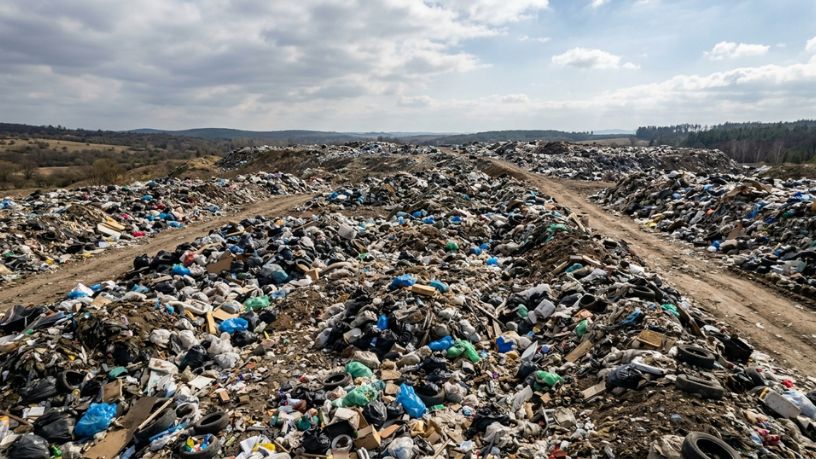
For engineer Felipe Schroeder dos Anjos, few Brazilian environmental goals have been postponed as many times as the elimination of open dumps. The National Solid Waste Policy, enacted in 2010, set 2014 as the deadline for ending open-air waste disposal. The 2020 Legal Framework for Sanitation introduced staggered new deadlines, the last of which expired in August 2024. Even so, around 1,600 cities were still using open dumps at that time, and the problem remains far from a definitive solution.
The Difference Between an Open Dump and a Sanitary Landfill
An open dump is an area where waste is deposited directly onto the ground without any protective measures. In this setting, leachate, the dark liquid produced by decomposing waste, seeps into the soil and can reach groundwater. Gases escape uncontrolled, insects and rodents are attracted to the site, and waste pickers often work in precarious conditions, exposed to health risks and accidents. Beyond the direct damage, contaminated land loses value and restricts future use for decades.
A sanitary landfill, by contrast, is an engineering project. It features soil liners, leachate drainage and treatment systems, gas collection, waste compaction, and daily waste cover. According to Felipe Schroeder dos Anjos, confusion between this infrastructure and a so-called controlled landfill, which merely covers waste with soil, continues to obscure part of the problem in municipal statistics.
The Numbers Behind the Missed Deadline
The latest data reveal the scale of the delay. According to the 2024 Overview of Solid Waste in Brazil, 41% of the waste generated in 2023, equivalent to 28.7 million tonnes, was disposed of in environmentally inadequate ways. According to the Brazilian Institute of Geography and Statistics (IBGE), three out of every ten Brazilian municipalities still rely on open dumps, with the situation particularly serious in the North, Northeast, and Central-West regions.
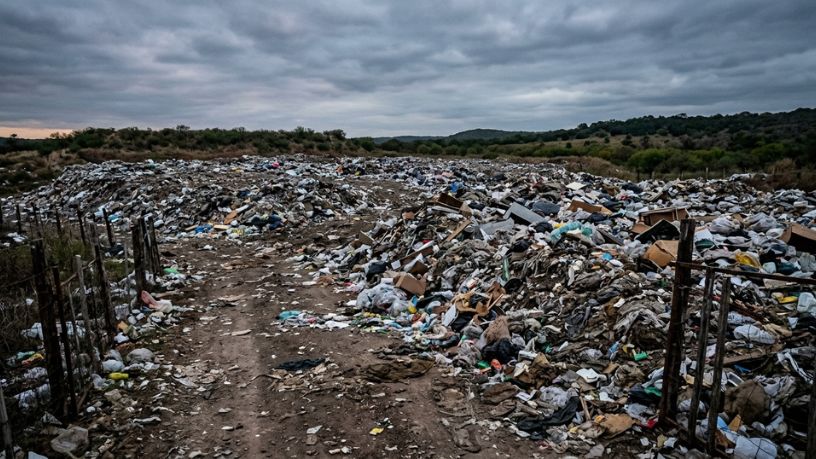
The final legal deadline applied specifically to municipalities with fewer than 50,000 inhabitants, which face the greatest technical and financial challenges. The lack of their own revenue makes matters worse, as a report by the National Water and Basic Sanitation Agency found that only 438 of Brazil’s 5,570 municipalities had demonstrated that they charge for solid waste management services.
Where Municipal Governments Often Go Wrong
A recurring mistake is treating closure as simply shutting the gate. A decommissioned open dump continues to generate leachate and gases for years, so it requires a degraded-area recovery plan, drainage, and soil and water monitoring. As Felipe Schroeder dos Anjos points out, abandoning the site without these measures merely transfers the environmental liability to future administrations.
Another common mistake is insisting on operating standalone landfills without sufficient scale. In small towns, the cost per tonne of waste received to build and operate a sanitary landfill is too high for local budgets. Without proper maintenance, the facility deteriorates over time and effectively becomes another open dump. The problem worsens when technical staff and waste intake controls are lacking, allowing the landfill to receive materials it should not accept.
Intermunicipal Consortia as a Viable Solution
The most effective alternative for smaller municipalities is regionalized waste management. Through intermunicipal consortia, several cities share the costs of a larger sanitary landfill, supported by transfer stations that reduce transportation expenses. In Felipe Schroeder dos Anjos’s view, the economies of scale achieved through this cooperation make it possible to operate in compliance with technical standards.
Financial sustainability completes the model. Charging for waste management services, as provided for under the Legal Framework for Sanitation, ensures funding to operate and maintain the landfill over time. When closing an open dump also involves integrating waste pickers into cooperatives, the solution becomes not only environmental but also social. With regional planning, dedicated revenue, and the proper technical closure of former dump sites, the missed deadline can finally translate into tangible results.